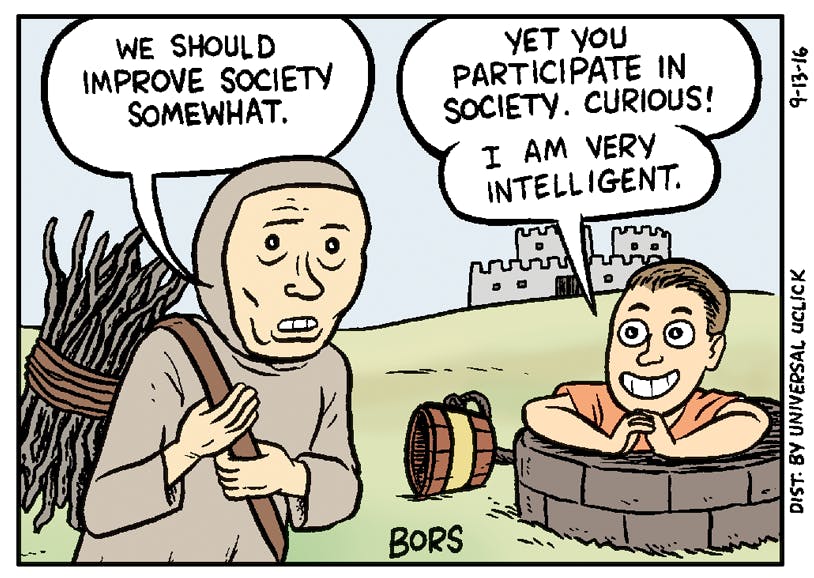
“Social Determinants of Health” is a bullshit term
Let us begin the 2026 with a rant.
Last December, my girlfriend Ranna started her medical internship in Leuwiliang, Bogor Regency. It is a two and a half hour away ride from her home in Jakarta. It is not that far away, compared to the place when I did my internship in Rote which is 32 times farther (I have consulted ChatGPT on this matter). But again, the distance is still too far away if she wants to stay in her home, so she had to find a place to live.
For the past month, she had been complaining about her accomodation board (indekos). It is very small and claustrophobic (about only 9 meters square). Fortunately, there is a bathroom inside each room. But another downside: the wall is too thin to insulate each room, so there is hardly any privacy.
To give some context, that living quarters by Indonesian standard is decent. It is air conditioned, has private bathrooms and all. Still, not all common things should be normalized. Indonesian national standard (SNI) requires minimum living space per household being 9.6 meters square. So, this board violates the living space regulation. Again, knowing the law enforcement situation in Indonesia, this is as usual as it gets (it comes to a point where I am more surpised if someone followed the regulations by the book.)
The room has only one window, and that faces a dark short corridor where the residents enter their own rooms (no sunlight whatsoever). There is no common room or even kitchen of some sort, which resulted in no space for social interaction between residents whatsoever.
“What makes this different from a stable, then?” so I thought. At least those horses still have ranch outside to run around and mingling with mares.
She told me that the small space of her room makes her more stressed, added with the workload she faced as a doctor in the Puskesmas (we will save this conversation in the future). Well I could not imagine myself, having to live in such a cramped living space. So I suggested her to go outside and only reserve the room only for sleeping and cleaning.
But now the problem shifts outside. The road is unsafe. So many road users (be it motorcycles, angkot, cars, and trucks) driving recklessly. Jalan Raya Leuwiliang is famous for being so crowded and congested. Bikers entering the road without any regard of other road users whatsoever, angkot driver stopping in the middle of the road, awaiting passengers by honking at them, while causing traffic behind them, pedestrian crossing the road freely (not knowing they risked their lives every time they step on the ashpalt), overloaded trucks with improperly stored load that can drop into the road anytime (once I had to face a bucket falling out of a truck in a highway while driving a car at 80km/h). I feel like I can make a whole social commentary just by driving in that road for an hour.
The road also does not have sidewalks (a mythical entity that only exists in Jakarta). That makes a walk, which initially aimed to decompress one’s mind, becoming a life-threatening venture.
There are no public space, either. The entire town is akin to radiator springs in Cars, a provincial road that happen to be a checkpoint for travellers, with the housing developed sideways and outwards with only small roads that can only be passed with a single car or motorcycle.
All of these makes me think: it is true that there are a lot of people in here — so many in fact. But how do they actually live? How could one live in a dignified manner in such environment, not just merely surviving another day breathing?
Some people reading this might accuse me for being out of touch with the reality of majority of Indonesians. Let me retort: I do believe people in Rote live much more dignified lives compared to people in Leuwiliang, thought having much less money. They still eat quality produces, freshly fished from the sea. There are no traffic jams that takes out unnecessary time of their lives. They still can enjoy pristine Godsent nature that is still untapped with the machine of capitalism. When I said dignified life, I always say: it is not always about the money.
I am currently reading Everything by Tuberculosis by John Green. It is such a refreshing book by world-renowned author to speak about the health problem rarely talked by non-health people: Tuberculosis. I am still halfway in, but I got so much insight from the book. From what I read so far, the overall message of book is basically the title: everything is somewhat related to TB.
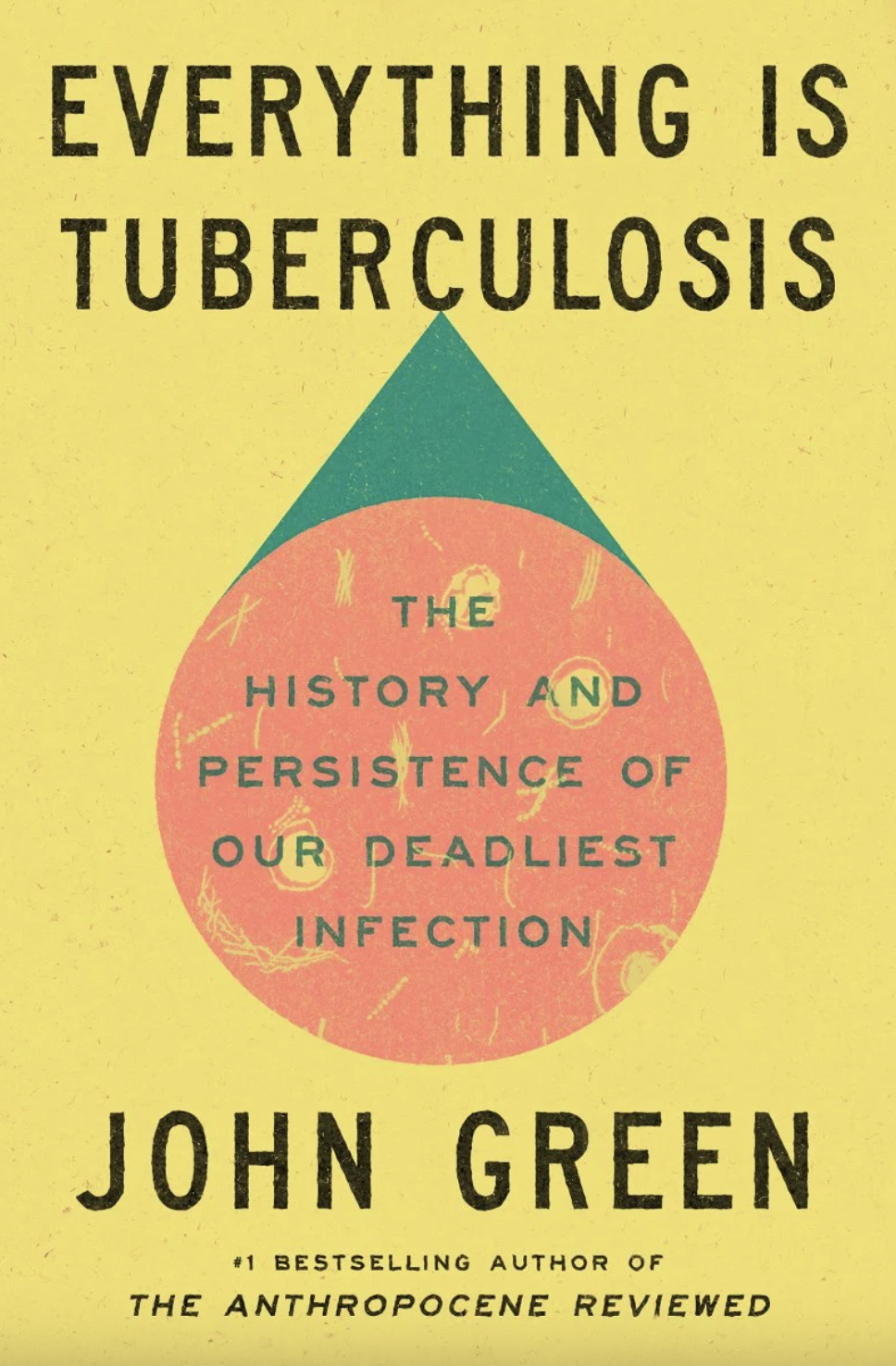 Everything is Tuberculosis by John GreenI learned about TB since my medical school days, and communicable disease control has been my career of choice for the past years, so I could say that I know a thing or two about tuberculosis and other communicable diseases. Before reading a single sentence of that book, I already agreed with John’s idea that everything is about that disease. Everything is about health.
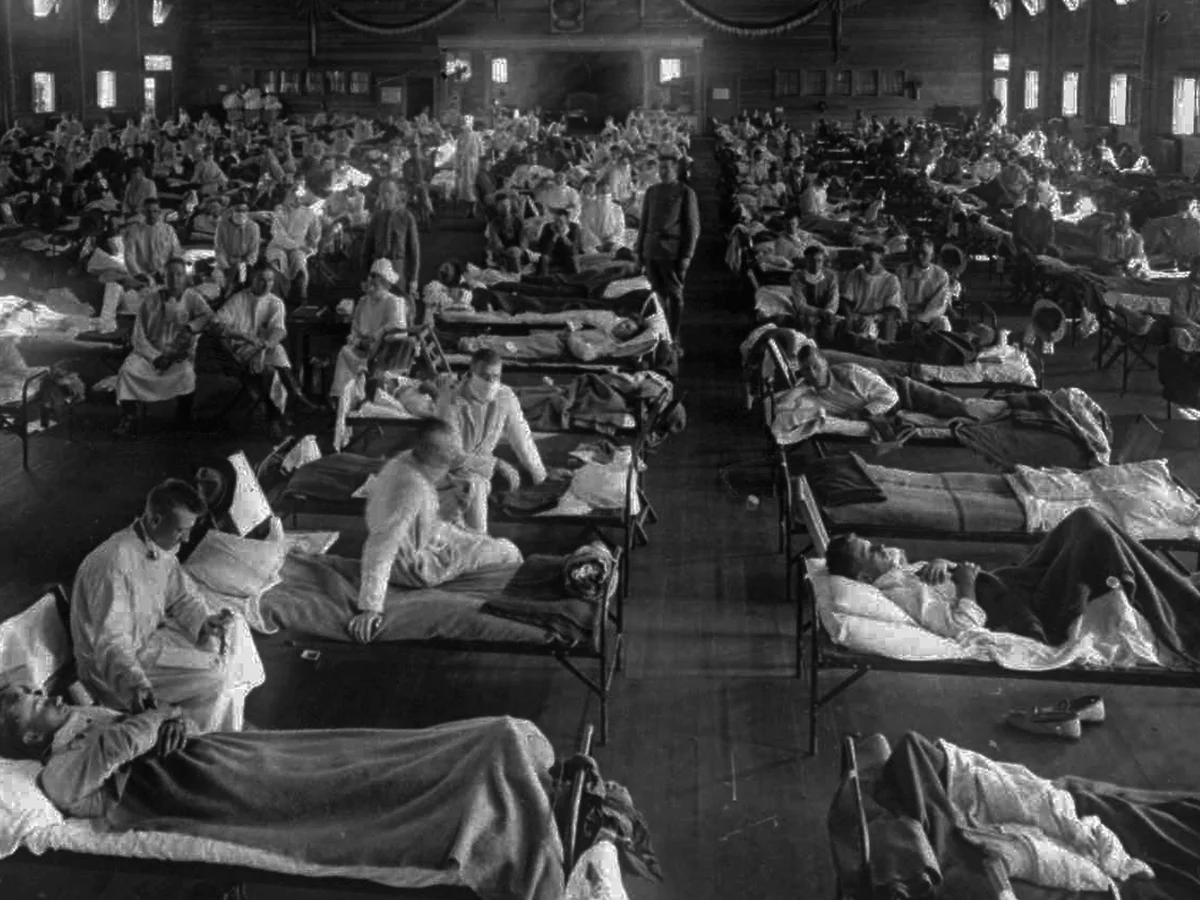
Yet, health is still overlooked in history. History books are filled with war stories, rise and fall of empires, great figures who change the course of humankind. Less is talked about how the Spanish flu caused to more deaths than the whole combat of World War I, or how malaria contributes to three casualties in pacific theatre of the Second World War for every one casualty due to combat.
And if we talk about recent history, it took only three years for Donald Trump to forget the importance of multilateralism to ensure global health security. Since the Covid-19 pandemic attenuated in 2022, President Trump withdrew the US from the World Health Organization in 2025, crippling the global health infrastrucuture and has not recovered since.
Health being taken for granted is a tale as old as time.
Back to John Green’s book, it was heartbreaking to read some of the facts related to the history of TB. One particular fact was that how consumption (previous name for TB), was revered as an ailment that brings the beauty of people and artistry to the poets and alike. But after the industrial revolution, with the rise of working class and poor living conditions, the narrative shifted to TB being the diseases of the poor and desitute. There has even evidence of scientists in 19th century trying to attribute tuberculosis to race (previously it was said only whites can have consumption, but after the narrative changed, it was blacks who had inferior genes that are more susceptible to TB.)
It can be easy to see those before us as folly who did not know any better, but who can prevent us being seen as folly from people hundreds of years from now? The lesson learned is not about how they did not know any better, but how science and knowledge advancement was always related to power structure and social relations between classes and groups.
I have been working in global health only for a short time, but since the beginning, I always believed that there has got to be more than personal agency in one’s health. In the medical school, we were taught about all clinical and biological aspects of an individual. An individual in itself is a complex system — that is why a living being is called an organism. We learned how kidneys maintain blood pressure, how heart can keep pumping out blood in perpetuity, how diseases spread through pathogens and proliferate inside our body. Those knowledge shapes the contemporary clinical medicine that we now know in doctors office and operating rooms.
That said, we have to acknowledge more that we are a complex system living in complex systems. We live in a society, a bunch of organisms. As long as we do not live alone by ourselves, we have to account our health also to our surroundings — both the living and nonliving. Learning only the human body when studying medicine is akin to only learning classical mechanics when learning physics. There is a faulty assumption when learning about an individual human body that all the external factors being held constant. But human body is never in such conditions in real life. There are frictions, thermodynamics, space and time relativity in physics and engineering.
Hence, I come to a conclusion that “social determinants of health” is bullshit. It is redundant, just like ‘ascending upward’ or ‘medical science’. Since when ascending means downward? Since when modern medicine involve nonscientific, non-evidence-backed interventions? And more importantly, since when does health not involving our social aspects?
And the funny thing is the contemporary medicine see Social Determinants of Health as a subtopic like
“Oh we should not forget about the social aspects that determines our health yada yada…”
As if it is not completely the central theme. I had never read a single paper on the “Individual determinants of health”. There is no such thing because that is the whole medical science. We focus all on the individual but rarely about the population. It is a classic seeing the tree but not the forest parable.
Back to Leuwiliang
If you still disagree with my notions, consider this thought experiment. Say we clone a doctor: one lives in Leuwiliang, Indonesia and one lives in Zurich, Switzerland. Both work as general practitioner, have exact same medical history, eating the exact same diet, exercise the same regiment in the hypothetical same gym equipment, but one live in a regular ‘decent’ board like where my girlfriend currently lives in, and the other one lives in a regular ‘decent’ board where regular people in Zurich live. And think how would be the health status of each after twenty years.
My guess would be the one in Leuwiliang would have gained signficiant weight due to lack of sleep, lonely, and burnt out due to overworking with no recreational activity, all of these contributed to the rising level of cortisol and causing metabolic syndrome. Oh and by year fifteen he or she might have gone to the hospital due to being hit by speeding motorcycle while walking in a nonexistent sidewalk to buy groceries.
Meanwhile, the doctor in Zurich would have been distraught after being reprimanded by his or her supervisor for being late on a shift because the tram is delayed by two minutes, once.
Being sad, he or she decided to go to Rieterpark to relax, enjoying clean air and open space, and then watching Don Giovanni in Opernhaus. Then he or she is thinking since it is summer, why not hiking in Stoos?